PROJECTS IN THE OVERBERG
Active in ABI Landscape
The Overberg Conservation Alliance:
Connecting and Restoring Nature Across the Overberg
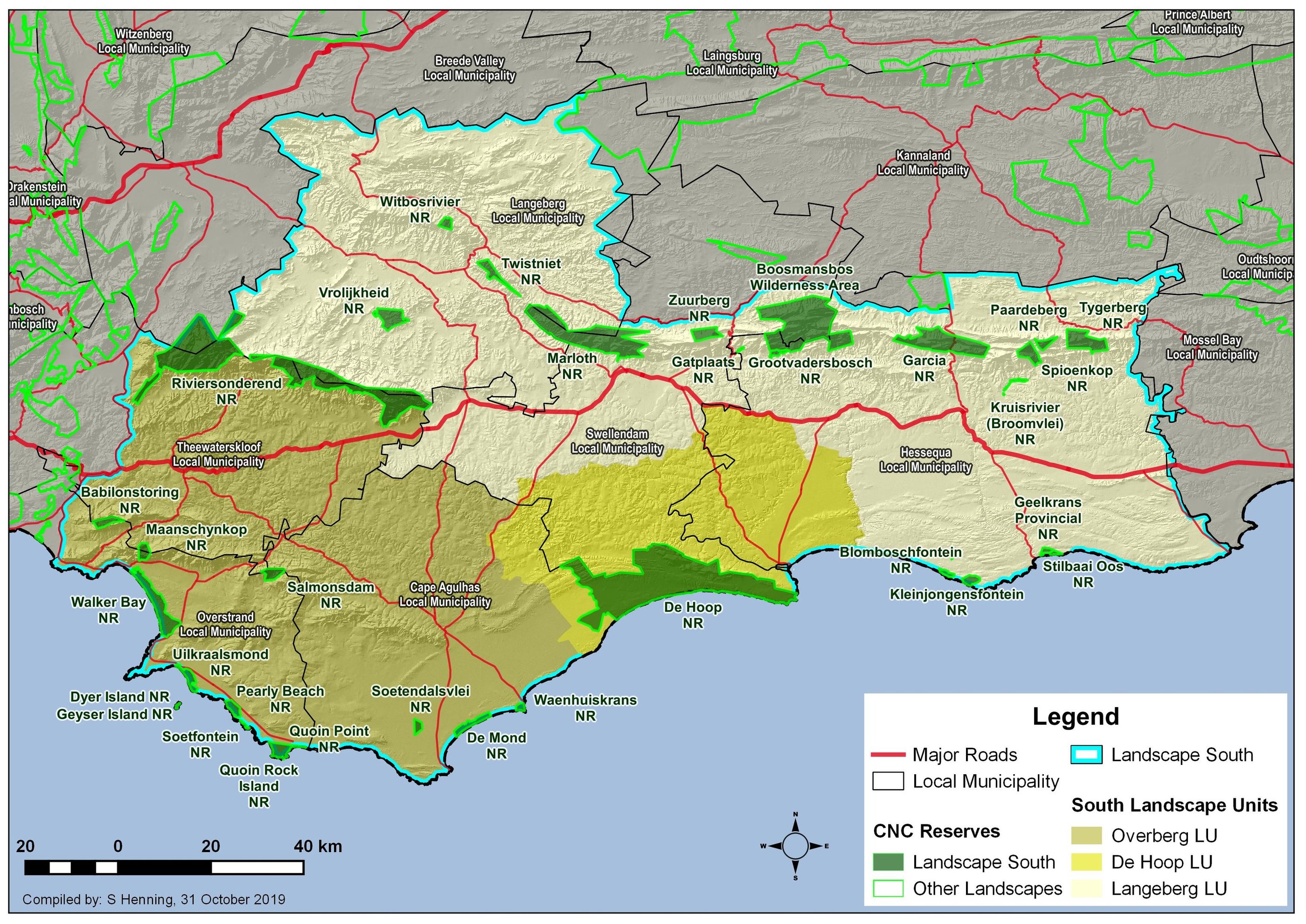
The Overberg Conservation Alliance brings together four conservation partners working across one of South Africa’s most biologically rich and threatened landscapes, the Overberg.
These organisations work across a wide range of ecosystems, many threatened and facing extinction should no action be taken. The operational areas of the members adjoin and complement one another. And all four members share aligned conservation and social development objectives. This gives the Overberg Conservation Alliance the ideal opportunity to scale up work together to a broader landscape level – one that covers much of the Overberg’s remaining natural world.
Each of the four partner organisations continues to pursue its own objectives, but through the Overberg Conservation Alliance are able to combine experience and expertise to increase impact across the Overberg.


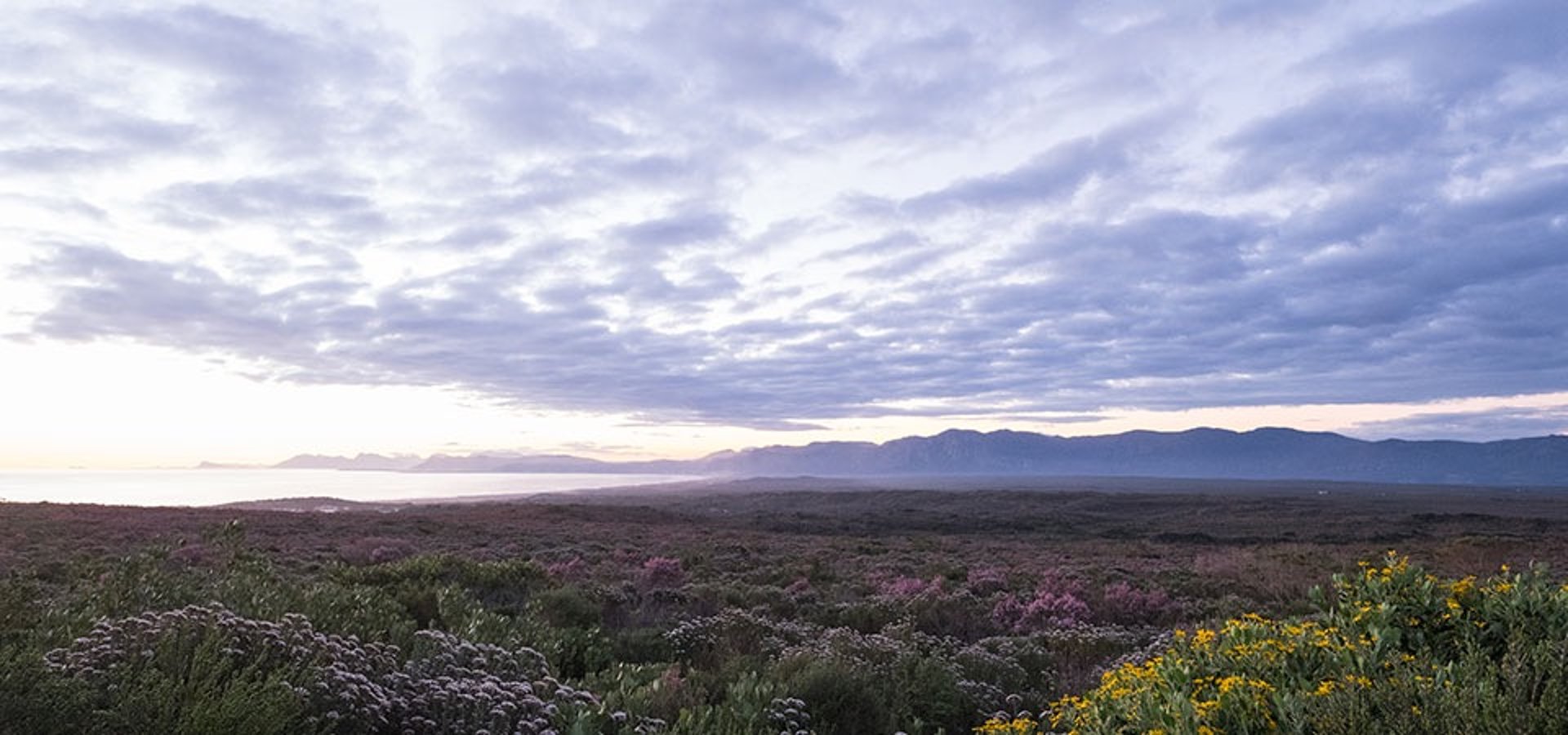
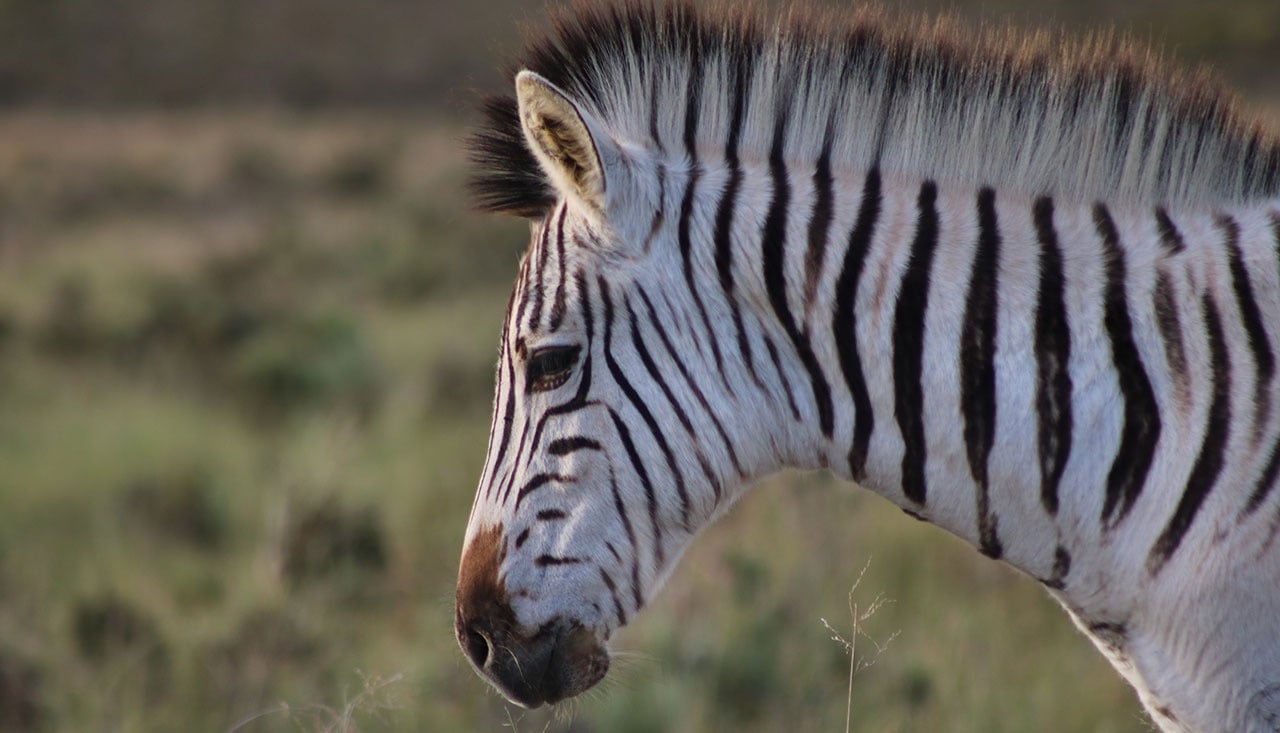
Photograph by Odette Curtis, Overberg Renosterveld Trust
Cross-Catchment Collective
The CCC is a collaborative platform and learning partnership that brings together catchment initiatives from across South Africa to work across landscapes rather than in silos. The CCC is not an implementing project on the ground; instead, it is an enabling collective that strengthens the conditions for long-term, catchment-scale impact. The CCC role is to connect, convene, align and support those already doing the work so that individual efforts add up to systemic change.
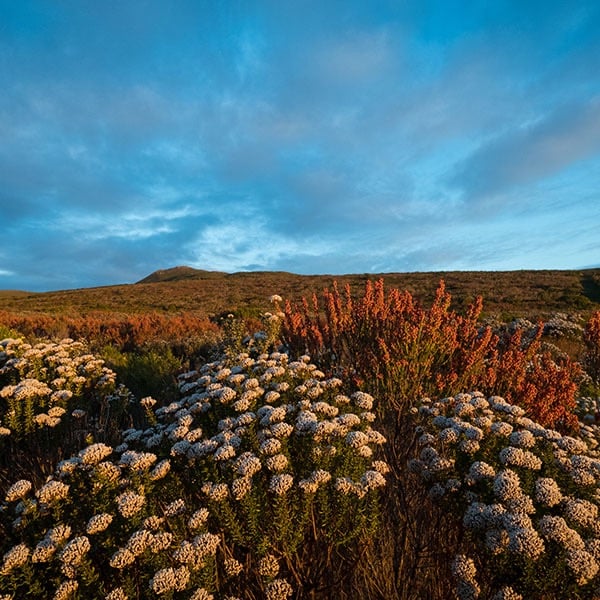
Photograph by Brett Natrass, supplied by Table Mountain Fund
Onrus Catchment-to-Coast Restoration and Rehabilitation
A catchment to coast management philosophy recognises the fact that water and land use activities in a catchment impact on the downstream functionality of all rivers, wetlands, and estuary ecosystems and as a result, the Overstrand Municipality’s Environmental Management and Conservation (OM: EMC) section launched their Onrus Catchment-to-Coast River Rehabilitation and Restoration Project.
This project deals with all aspects of the Onrus River system from the mountain to the sea and aims to restore and rehabilitate the entire Onrus Catchment and particularly the Onrus Peatland Wetland due to years of degradation and several other impacts. The project is divided into smaller sections to incorporate the upper, De Bos Dam, middle, Onrus Peatland Wetland, and lower catchment, the estuary into different phases and/or time periods for bettermanagement of the project.
With the understanding that both land and water use in a catchment is linked to the economy of the area, the restoration of a catchment also needs to take the ecosystem functioning into consideration and find a balance. However, the complete restoration of ecosystem services for the entire Onrus River system is expected to take many years, especially if action is not taken soon.


Southern Landscape Collaborative Conservation Working Group
The Southern Landscape Collaborative Conservation Working Group is a multi‑stakeholder forum established to support and strengthen coordinated biodiversity conservation across the Overberg and Langeberg landscapes. Convened under CapeNature and aligned with the Agulhas Biodiversity Initiative (ABI), the Working Group brings together public, private, and civil society partners to improve collaboration, information‑sharing, and strategic alignment of conservation actions across privately and publicly owned land. It responds to a recognised need for more systematic coordination and tracking of progress against local, provincial, national, and international biodiversity frameworks, including CapeNature’s conservation planning, the Western Cape Biodiversity Strategy, and global “30 x 30” targets.
The purpose of the Working Group is to support partners in jointly planning, implementing, monitoring, and evaluating landscape‑scale conservation initiatives that promote resilient ecosystem functioning and connected ecological networks. It aims to convene relevant actors, collate and share spatial and project information, conceptualise collaborative initiatives, communicate the value of biodiversity conservation to landowners and stakeholders, and help make the case for investment in ecological resilience. Through these functions, the group seeks to enhance the effectiveness, resourcing, and long‑term sustainability of conservation and restoration efforts across the Southern Landscape.
CapeNature Overberg Landscape Unit Office:
+27 87 0873014 or +27 87 0874020
Previous Projects
ABI Revisioning Project
- ABI: THE WAY FORWARD - Available here
- FOUNDATIONS OF THE ABI RE-VISIONING PROCESS, Caroline Petersen, Prosper with Nature, 2021 – Available here
- OVERVIEW OF ABI MEMBERS: STATUS, PERSPECTIVES AND COMMUNICATIONS PREFERENCES: - Available here
ABI Invasive Alien Clearing Project
AN EVALUATION OF THE AGULHAS BIODIVERSITY INITIATIVE’S (ABI) INVASIVE ALIEN CLEARING PROJECT IMPLEMENTED BY THE FLOWER VALLEY CONSERVATION TRUST 2013 TO 2020, Contour Enviro Group, 2021 | Available here
Resources:
Research, Legislation, Strategies and Policies
The resources section of the Agulhas Biodiversity Initiative (ABI) website provides a curated knowledge base to support conservation and sustainable land use in the Overberg. The research page compiles decades of biodiversity-related studies conducted in the region, including a database of research from 1987–2015 (originally collated by the University of Cape Town), with additional studies added since then, offering an overview of scientific work on ecosystems, biodiversity, and landscape management in the area. The resources section complements this by providing links to key policy documents, reports, and guidance relevant to practitioners, organised by themes such as agriculture, biodiversity, climate change, conservation management, finance, landscape planning, and water management, drawing from sources including government, NGOs, and research institutions to support evidence-based decision-making in the Overberg landscape.
ABI also subscribes to the principles of the Cross-Catchment Collective Research Framework (Available here). The CCC Research Framework sets out a shared, collaborative, approach for undertaking and engaging with research within and across catchments. Its purpose is to:
● Provide a collective reference point for catchment partnerships, researchers, and funders.
● Define priority themes and principles to ensure research responds to catchment needs and strengthens action on the ground.
● Clarify processes for identifying, designing, and sharing studies
● Ensure that diverse forms of knowledge are mobilised and accessible for decision-making, policy influence, local practice, and resource mobilisation.
The CCC does not intend this framework to act as a gatekeeping mechanism, but rather as an entry point for researchers seeking to engage with catchment partnerships in ways that respect and strengthen existing relationships.
While developed by the CCC partners, the framework is intended as a resource for others working to support collaborative catchment management, and may be adapted to suit different local contexts.
www.agulhasbiodiversity.co.za
© 2026 All Rights Reserved.
Website puursonalized by Purrsonal